MediSync - What We're Building, and Why
May 10, 2026 · 4 min read

What We're Building, and Why
There's a moment that happens to almost everyone working abroad with elderly parents back home. The phone rings at an odd hour. You see the name on the screen. Something tightens in your chest before you've even picked up.
Most of the time, it's nothing. Your mother wants to ask about your week. Your father has a question about the heater. But your body doesn't know that yet. It reacts the way it does because somewhere in the back of your head, you have been bracing for the call that isn't nothing.
That's the problem MediSync exists to solve. Not the call. The bracing.
What we're building
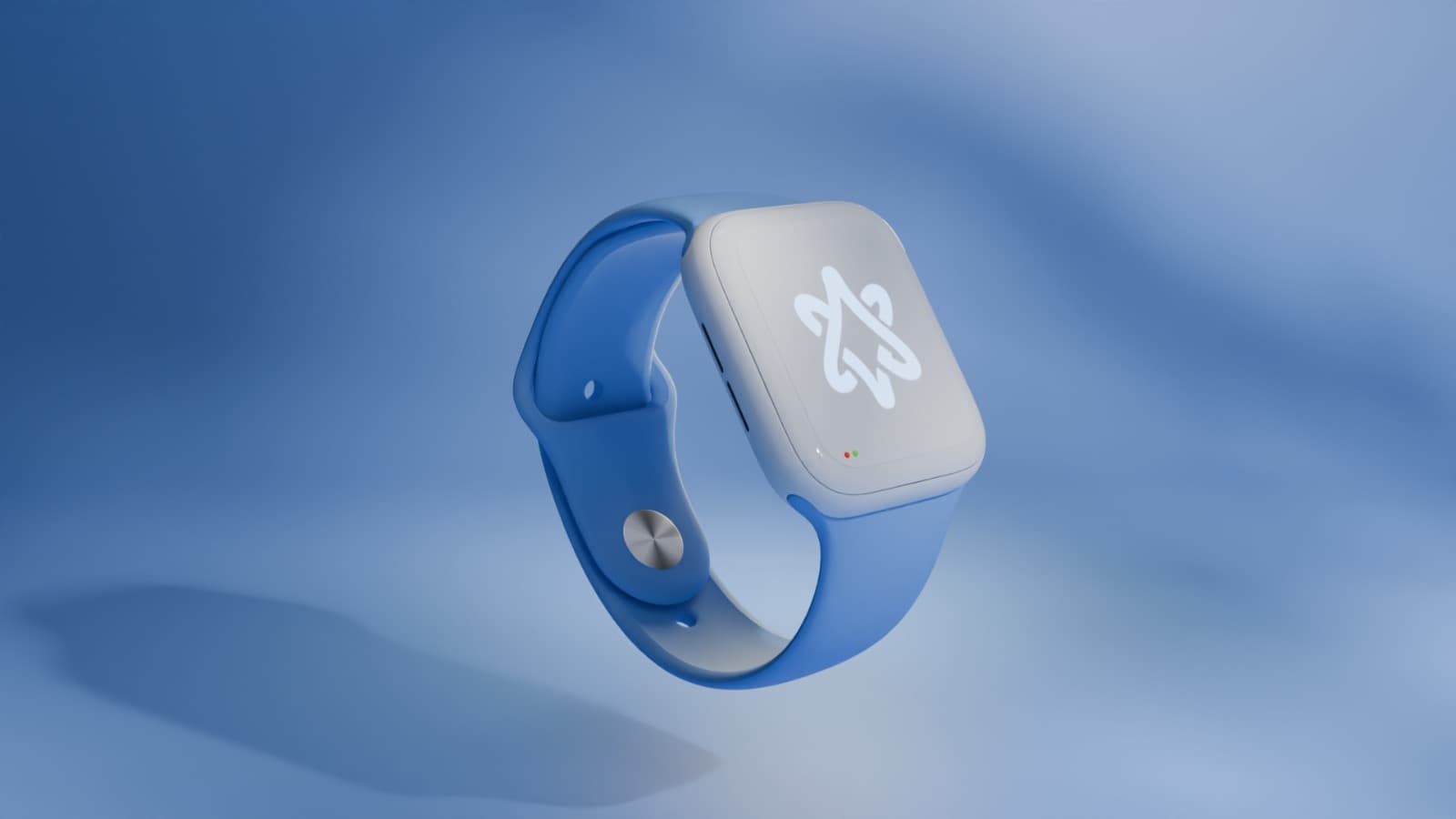
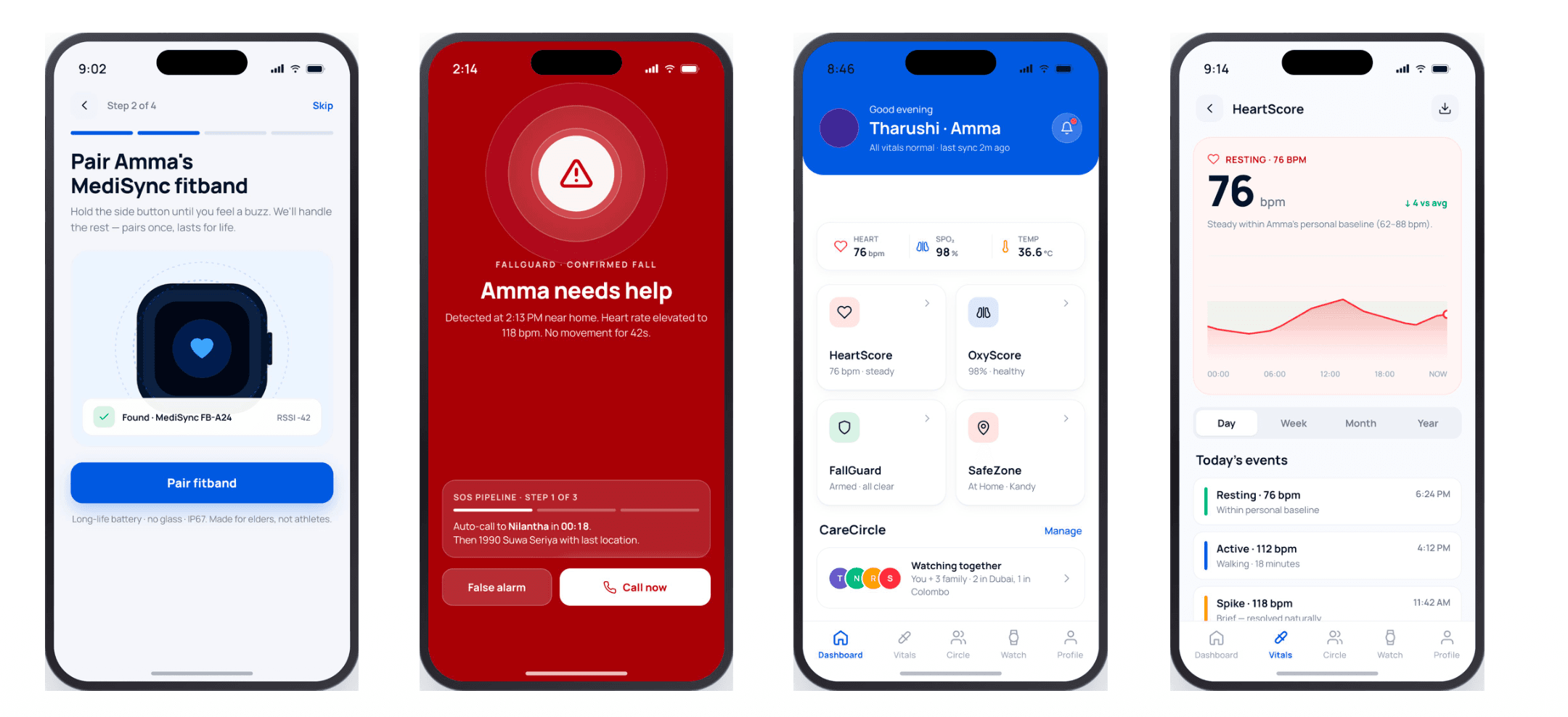
A small fitband, and an app.
The fitband is deliberately not a smartwatch. It doesn't ping when an email arrives. It doesn't play music or measure your VO2 max on a morning run. It is built for someone who is not going to charge a device every night, who has no interest in learning a new interface, and who really only needs to wear one thing on their wrist that does its job quietly.
It does five things:
- It watches the heart rate, around the clock, and learns what's normal for the person wearing it.
- It tracks blood oxygen, because slow drops are usually invisible until they aren't.
- It senses body temperature — the earliest signal of most infections.
- It detects falls. Real ones. Not stumbles, not a dropped wrist.
- It knows where the wearer is, and whether they've wandered out of the area their family considers safe.
The app is where the family lives. We call it the CareCircle, because that is what families already are, just usually scattered across time zones. A daughter in Kuwait, a son in Melbourne, a grandson in Toronto — they all see the same dashboard, the same trends, the same alerts. No one has to be the designated worrier texting siblings for updates at midnight.
And when something genuinely goes wrong — a fall, a reading the system flags as serious — the alert doesn't sit politely in a notification queue waiting to be checked. The family gets called. If no one picks up, emergency services do, with the wearer's last known location attached.
Why we're building it
We grew up in a country where you don't put your parents in homes. It isn't a strong preference. It's closer to a moral fact. Almost no Sri Lankan elder lives alone; almost all of them live with someone.
But the people who would normally be around have, increasingly, gone elsewhere. To Dubai. To London. To Doha, to Melbourne, to Milan. The economy pushes them out and the culture holds the parents in place, and what you're left with is a generation of caregivers trying to do something that geographically cannot be done.
You can wire money in thirty seconds. You can't wire yourself onto the chair next to your father at the doctor's office. You can call every day. You cannot tell whether his oxygen dropped at three in the morning.
We are building MediSync because someone has to close some of that distance, and the things that already exist — generic smartwatches, vague tracking apps, fragile glass devices priced for the global tech buyer rather than the Sri Lankan family — were not built for this. They were built for a fitness-tracking, notification-receiving, lifestyle-optimizing user. The grandmother in Galle is not that user. Her son in Riyadh, refreshing a notification screen at 6am his time, is not that user either.
What it isn't
It isn't a replacement for being there. We are not pretending otherwise. If you can be on the plane, be on the plane.
It isn't a medical device that diagnoses anything. It watches. It notices. It tells the family.
It isn't a smartwatch that happens to do health stuff. It's the opposite of that — a health device with no interest in being anything else.
What it is
A small band on a wrist, quietly carrying a piece of the weight a family across continents is already carrying anyway. Not all of it. Just enough that when the phone rings at an odd hour, you can answer it without the tightening in your chest first.